
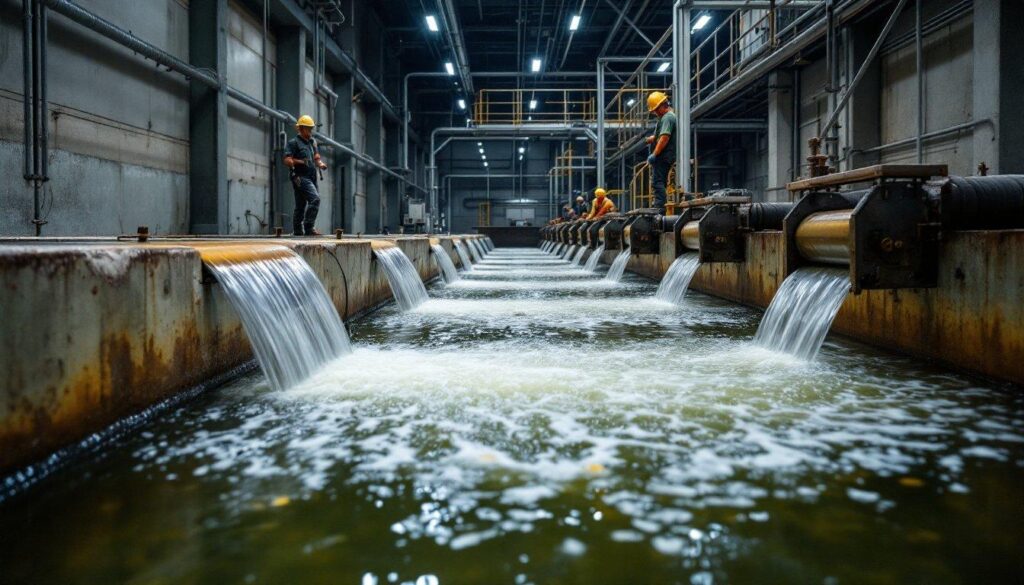
Limited water supplies that help to separate ore from rocks ensure mines are operating well. With communities and industries competing for water sources, companies must find ways to use each one of them wisely. To achieve a reduction in the need for fresh water for use, water needs to be recycled. But the results are influenced by factors such as the cost, quality, and conditions at the site.
Why Process Water Is Worth Recovering
Ore is crushed in processing plants, and water is used to transport crushed ore, for separating the minerals, and to control fine waste from the plants, known as tailings. Water may be collected after the solids have settled in the mines and reused in the plant for other uses rather than using fresh water.
Recycling can reduce costs due to increased water expenses, interruptions in water supply, and drought. However, the savings are not consistent and depend on pumps, energy, and maintenance to store the water, test it, and treat the water to the desired quality.
How Recycling Works in Practice
The initial step for a mine is to determine the location of water entry, transport, evaporation, and exit from a mining site. Engineers look at streams to find those that can be reused and those that require treatment. Contamination can be removed by settling tanks, filters, chemical treatment processes, and membrane systems.
Rather, operators correlate water quality to the job and, where needed, identify jobs that require better quality water. This prevents unnecessary treatment and helps to prevent damage to workers, equipment, and production.
What Real Mines Show
According to Anglo American reports, water re-use is on average 94% across its three Chilean assets, and Los Bronces is re-using around 90% of water in its mining process.
An example from a dry area is found in Mongolia–Oyu Tolgoi. More than 80% of production water is recycled, with recycling and conservation measures, reports Rio Tinto.
Making Reuse Work
Fresh water use, recycled water, and water quality should be monitored separately for mines. Changes in recycling percentage may mask increases in demand and tailings losses. Operators conduct regular tests and report results, allowing them to identify issues and demonstrate to the communities how effective their control system is.
There is no best practice substitute for having effective leak control measures, working equipment, good tailings management, and responsible tailings discharge practices. Pre-planning makes it easier, since pipes, storage, and treatment systems will be more difficult to install after a mine has opened. If reuse is not feasible or safe, treatment and controlled discharge are required.
The bottom line is that water can be recovered from mining operations at low cost and in consistent quality, which will allow mining to continue to use process water for recycling. Only by measuring with integrity and treating at a low cost can success be achieved. Reuse can be integrated into a broader water plan to support mine production, without pressure on local common water sources.