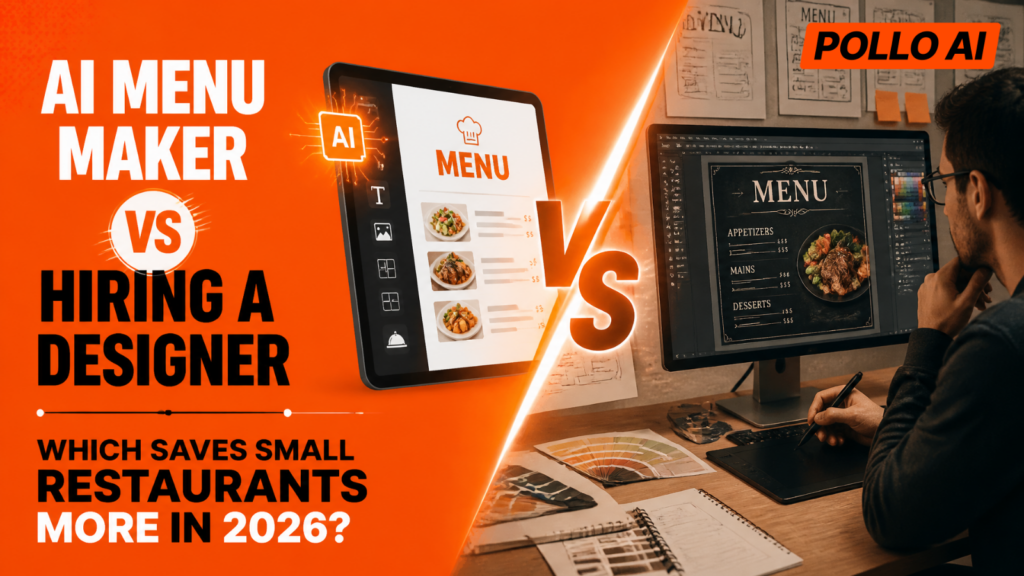
The cheapest way to make a menu is not always the option with the smallest initial bill. A restaurant owner may save on design fees but spend an evening correcting prices, resizing files, or rebuilding the layout. A designer may cost more upfront while handling work the team would otherwise absorb. To choose well, compare the full job: the first design, the review, the final files, and the updates that follow.
When does an AI menu maker save more?
AI is a practical starting point when the menu is short, the content is approved, and the restaurant needs a fresh visual direction. Pollo AI’s menu maker turns written menu details and style instructions into a design. Its free trial lets you assess that workflow before deciding whether ongoing use justifies a paid plan.
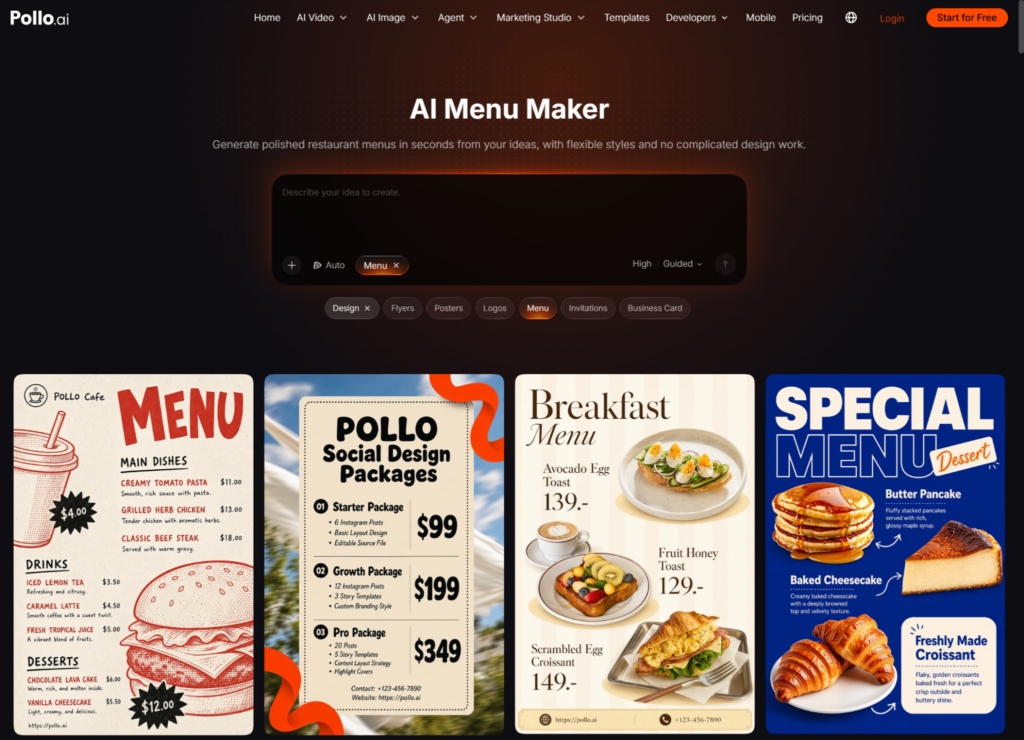
A lunch special or pop-up drinks list is a manageable test. You can check every line, judge the result at its intended size, and discover how much work a revision takes. The value depends on that complete process, rather than generation alone.
A designer becomes more attractive when the job includes complex categories, several languages, custom branding, or coordinated print materials. Those requirements add decisions and production work that a quick visual draft may not resolve.
How does a better brief reduce menu design costs?
A clear brief reduces avoidable revisions whether you use AI or hire a person. Separate the restaurant’s facts from its visual preferences, then identify the decisions that are already approved.
For visual ideas, browse AI image generator prompts to see how composition, lighting, color, and negative space can be described. Translate that vocabulary into a useful menu instruction, such as “a warm cream background with uncluttered space behind dish names.” Keep any food images faithful to the actual product.
Avoid a brief that says only “make it premium.” Explain what premium means for your restaurant: restrained colors, generous spacing, short descriptions, and clear prices, for example. Tell a designer the same thing. Better instructions reduce guesswork on both routes.
What belongs in the real cost comparison?
Count paid services and the time your team contributes. For AI, include software or credits, preparing the prompt, checking every item, making corrections, and preparing the final output. For a designer, include the agreed fee, your briefing and review time, and any work outside the quoted scope.
Use a consistent calculation: total production cost equals external charges plus staff hours multiplied by your chosen internal hourly value. Add printing separately if it is the same under either approach. If a workflow creates additional proofing or setup charges, include those differences.
For illustration only, suppose you value owner time at $20 per hour. Four hours spent producing an AI-assisted menu represent $80 of time before software costs. A hypothetical designer quote of $120 plus one hour of review represents $140. If the AI route takes eight hours, its time cost alone becomes $160. These are planning assumptions, not market rates or Pollo AI prices; substitute your actual figures.
When is hiring a designer worth the fee?
Hire a designer when specialist judgment or production responsibility is a significant part of the task. A long menu with awkward descriptions may need information reorganized before it can look clear. A restaurant rebrand needs decisions that carry across signage, menus, and promotional materials.
Ask what the quote includes. Confirm revision rounds, final formats, editable source files, typography or image licensing, print preparation, and the arrangement for future updates. Two quotes with the same headline price may cover very different work.
Also clarify who supplies and approves the content. Hiring a designer does not transfer knowledge of your ingredients, portions, or current offers. Someone from the restaurant still needs to verify those facts before publication.
Can an AI and designer workflow save more together?
Yes, when AI helps settle the direction and the designer handles a clearly defined finishing task. You might explore a visual concept in Pollo AI, approve the content internally, then commission a designer to create a maintainable layout or prepare a demanding print format.
Agree on that handoff before paying for work. A flattened image may need to be rebuilt rather than simply adjusted. Ask whether the designer can use the concept as a reference and what editable deliverable you will receive.
This approach suits a business that needs occasional professional production but wants to contribute more of the preparation. The potential saving comes from narrowing the assignment, not assuming that an AI draft automatically reduces a designer’s fee.
Which option makes future updates easier?
The better long-term choice is the one your team can maintain accurately. Before choosing either route, test a price change, a removed dish, and a longer description. Check how much unrelated content needs reviewing afterward.
Keep the approved menu copy outside the artwork and assign an owner for updates. Use dated exports and check every published destination when an offer changes. A low-cost first menu can become expensive if each small update requires starting again.
Choose the smaller complete workload
Use AI for a focused menu when your team can review and publish the result efficiently. Invest in a designer when complexity, brand consistency, or final production calls for specialist help. Try one realistic menu in Pollo AI, record the full time and cost, and compare that result with a written design quote before deciding how to produce the next version.