
Learning CPR and basic first aid is critical for handling everyday emergencies at home or work. This guide explains what to expect in modern training, why blended learning makes certification easy, and how you can prepare to save a life when every second matters.
Have you ever frozen up during an emergency? Maybe someone burned their hand badly at a family barbecue, or a coworker suddenly collapsed in the breakroom. It’s a terrifying feeling when you don’t know what to do. The good news is that you don’t need a medical degree to save a life. You just need the right practical training.
That’s exactly why signing up for Coast2Coast first aid and CPR training in Long Beach is one of the smartest decisions you can make this year. It equips you with the confidence to step up when things go wrong.
Why is First Aid Training So Critical?
When a medical emergency happens, time is your biggest enemy. Even the absolute fastest ambulances take several minutes to arrive on the scene. During a cardiac arrest, a person’s chances of survival drop drastically with every single minute that passes without CPR.
You become the literal bridge between an accident and professional medical help. Having basic skills means you can keep someone stable until the paramedics take over. It’s not about being a superhero. It’s about being prepared.
Think about the people you spend the most time with. The reality is that if you ever need to use CPR, it will likely be on a friend, a family member, or a coworker. Doesn’t it make sense to know how to help them?
What Will You Actually Learn in a Class?
A lot of people skip training because they think it will be too complicated or technical. Honestly, it’s not. Modern classes are designed for everyday people. The instructors break things down into simple, memorable steps.
Here is exactly what you can expect to tackle:
- CPR for all ages: You’ll learn the differences between performing chest compressions on adults, children, and infants.
- How to use an AED: Automated External Defibrillators look intimidating, but they actually talk you through the whole process. You’ll get hands-on practice.
- Choking relief: Learning the Heimlich maneuver and back blows can instantly save a choking victim.
- Basic wound care: You’ll cover how to quickly bandage cuts, manage burns, and recognize the signs of a stroke or heart attack.
How Does Blended Learning Work?
We all have crazy schedules, right? Sitting in a classroom for a full weekend isn’t always realistic anymore. That’s why blended learning has become so incredibly popular. It respects your time.
Blended learning simply splits the course in half. You do the theory portion online from your own couch, at your own pace. Then, you only come into the facility for a few hours to do the physical skills test.
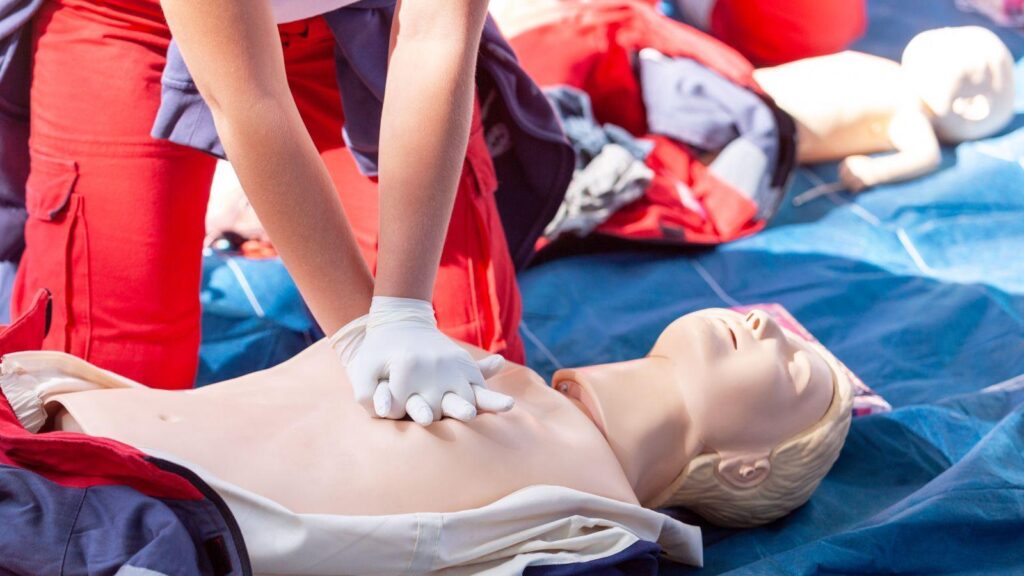
During the in-person session, you get to practice on actual mannequins. An expert instructor will adjust your hand placement, check your compression depth, and answer your questions. It gives you the perfect mix of convenience and hands-on confidence.
If you are looking for first aid training near Harbor City, the Pacific Coast Highway, or other areas close to our facility, then you may reach out to Coast2Coast First Aid/CPR – Long Beach in that area.
For more info and articles like this click here.
What Are the Most Common Questions About Training? (FAQs)
How long does a CPR certification usually last? Most standard First Aid and CPR certifications are valid for up to three years. However, Basic Life Support (BLS) is typically valid for one year. Always check with your employer to see how often they require you to recertify.
Do I need any prior medical knowledge to take a course? Not at all. Standard first aid courses are built specifically for the general public. Your instructor will teach you everything you need to know from the ground up.
Is the in-person training portion physically demanding? It requires some physical effort, particularly when practicing chest compressions on the floor. However, instructors are accommodating and can offer modifications if you have bad knees or mobility issues. Just let them know beforehand.
Can I fail a First Aid and CPR class? While there is a practical evaluation and sometimes a short multiple-choice quiz, the goal of the instructor is to help you succeed. If you struggle with a specific skill, they will work with you until you get it right.
Are online-only CPR certificates valid? For most workplace requirements, no. Organizations like the Red Cross and AHA require an in-person skills assessment to issue a fully valid, workplace-approved certificate. Blended learning is the best way to meet this requirement efficiently.