
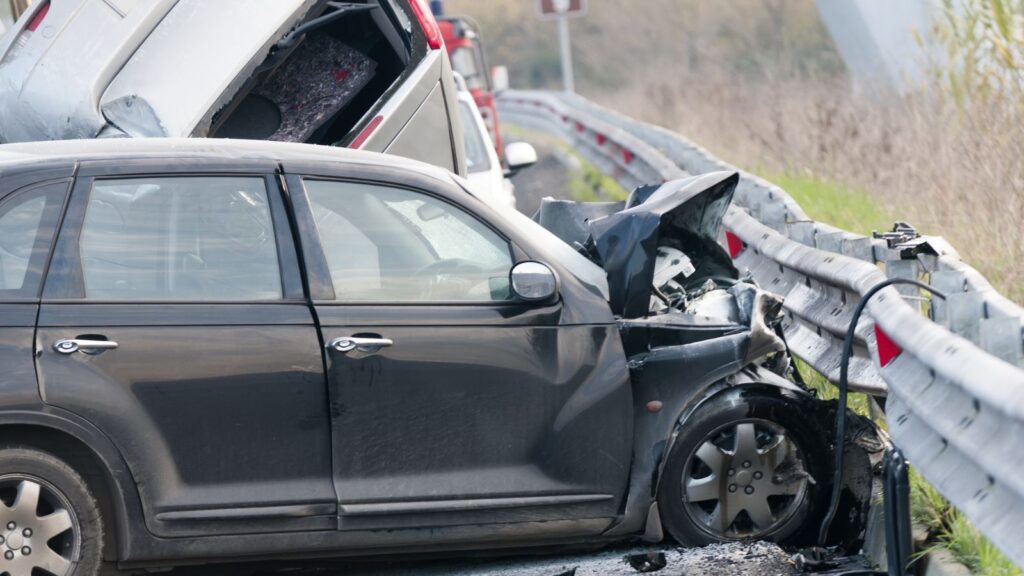
Cars are becoming increasingly good at recording what happens around them.
Dashcams capture the seconds before a collision. GPS systems log location and speed. Advanced driver-assistance features can track braking, steering, lane position, and proximity to other vehicles. Some newer vehicles continuously communicate with mobile apps, cloud platforms, roadside infrastructure, and manufacturer systems.
In theory, all of that information should make road accidents easier to understand. Instead of relying entirely on conflicting memories and physical damage, investigators may have access to a digital trail showing exactly what happened.
Reality is more complicated.
The same technology that creates useful evidence can also introduce new questions. Who owns the data? Was the driver-assistance system operating correctly? Did the driver ignore a warning? Can a vehicle manufacturer retrieve information that an injured driver cannot access? And what happens when different digital records appear to tell different stories?
As vehicles become smarter, figuring out responsibility after a crash may involve far more than examining skid marks and interviewing witnesses.
Cars Are Becoming Moving Data Centers
Modern vehicles contain dozens of electronic systems that monitor how the car is operating.
Depending on the model, a vehicle may record information about speed, braking, acceleration, steering input, seat belt use, airbag deployment, engine performance, and the operation of safety systems.
Event data recorders, sometimes compared to aircraft black boxes, can preserve information from the moments immediately before and during a collision. The amount of information available varies between vehicles, but these systems can offer investigators valuable clues.
At the same time, connected cars may generate additional information through navigation systems and mobile applications.
A driver’s phone might show their route. A vehicle’s navigation history might establish where it had been. A telematics system may record sudden braking or acceleration. Some insurance programs even collect driving behavior directly through devices or smartphone apps.
Accident reconstruction is therefore becoming increasingly digital.
That does not necessarily make it simple.
Dashcams Can Clarify What Witnesses Cannot
Human memory is surprisingly unreliable during stressful events.
Two people involved in the same accident may remember the sequence completely differently. Witnesses can also misjudge distances, vehicle speeds, or which traffic signal changed first.
Dashcams can help remove some uncertainty.
A camera may capture a vehicle crossing the center line, running a red light, changing lanes without enough space, or suddenly stopping in traffic. Video can also reveal road conditions, weather, visibility, pedestrian movement, and nearby vehicles.
Yet dashcam evidence has limits.
A camera only records what is within its field of view. Wide-angle lenses can distort distance. Video quality may be poor at night. The recording might not capture what the driver could see through another window or mirror.
A short video clip can also lack important context.
For example, footage may show one vehicle suddenly braking without revealing that another vehicle several cars ahead created the hazard.
Digital evidence can therefore be extremely useful while still requiring careful interpretation.
Driver-Assistance Systems Create New Questions
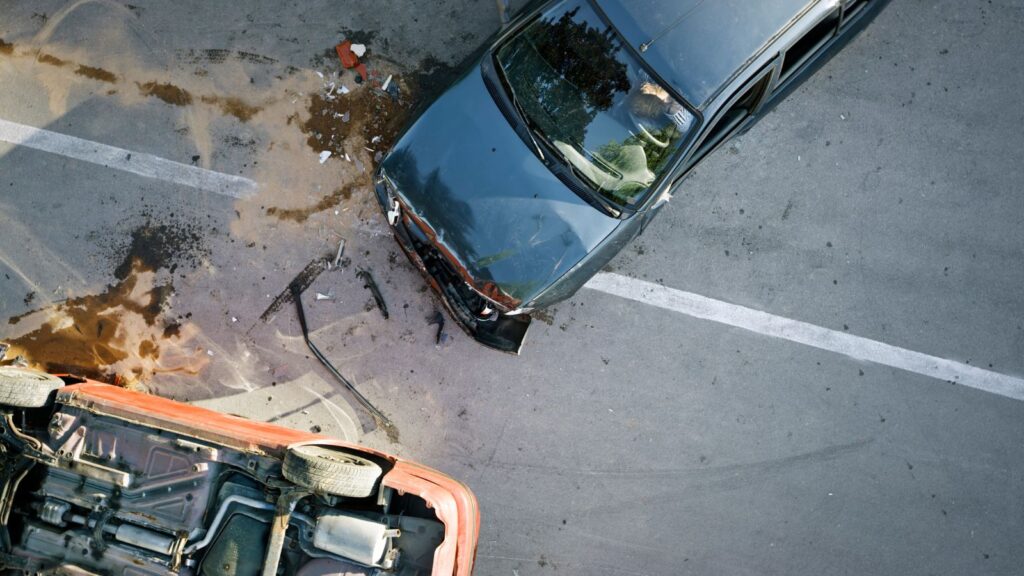
Features such as adaptive cruise control, automatic emergency braking, blind-spot monitoring, lane-centering assistance, and collision warnings are designed to reduce risk.
But they also change the relationship between driver and machine.
When a crash occurs while one of these systems is active, investigators may need to determine what the software detected and how both the vehicle and driver responded.
Did the system issue a warning?
Did the driver have enough time to react?
Did automatic braking activate?
Was a sensor blocked by dirt, weather, glare, or another environmental factor?
Was the technology being used in conditions for which it was not designed?
These questions become especially important because driver-assistance technologies vary significantly between manufacturers and models. A feature that sounds highly automated may still require constant driver supervision.
Marketing language can sometimes complicate public expectations too. Consumers may hear terms such as automated driving, autopilot, intelligent cruise control, or hands-free driving and assume systems are more independent than they actually are.
After a collision, understanding exactly what the technology was capable of doing may become part of determining what went wrong.
More Evidence Does Not Always Mean More Certainty
One of the paradoxes of smart vehicles is that an accident investigation can have more evidence than ever while still becoming harder to resolve.
Imagine a crash where a dashcam appears to support one driver’s version of events, vehicle sensor information suggests something different, and witnesses remember another sequence entirely.
Investigators then have to decide which information is most reliable.
Timing differences can matter. A smartphone GPS log, dashcam timestamp, vehicle computer, and roadside camera may not all be synchronized perfectly.
Even small discrepancies can affect how events appear when investigators attempt to reconstruct a collision second by second.
Digital records may also require specialists who understand how specific vehicle systems store and interpret information.
What appears to be a simple sensor reading may make little sense without knowing how that vehicle processes data.
Technology can provide answers, but those answers often need context.
When Technology Doesn’t Settle the Question of Responsibility
Serious crashes can involve several competing explanations.
One driver may argue that another vehicle caused the collision. An insurer may interpret the available evidence differently. Vehicle data could suggest that a safety system activated, while witness testimony suggests the driver reacted late.
The consequences become much greater when the crash results in significant injuries, lost income, long-term medical treatment, or permanent disability.
In these situations, determining responsibility may involve reviewing physical evidence alongside video recordings, medical records, vehicle data, witness accounts, expert analysis, and insurance documentation. People facing complicated claims may seek legal help after a serious injury when questions about liability, compensation, or conflicting evidence cannot be resolved easily.
Smart-car technology may strengthen a case when the data clearly supports one version of events. But it can also create disputes about how that information should be interpreted.
Evidence is only useful when people can establish what it actually means.
Who Controls the Data After a Crash?
Another growing issue involves access.
Drivers may assume that information generated by their own vehicle automatically belongs to them or can easily be downloaded.
That is not always the practical reality.
Some information can be retrieved directly from the vehicle. Other records may be stored in manufacturer systems, mobile apps, insurance platforms, or cloud services.
Different organizations may therefore control different pieces of the digital picture.
This creates important questions about privacy and transparency.
How long should driving information be stored?
Who can request it after an accident?
Can companies use vehicle data for purposes beyond safety and maintenance?
Should drivers be able to delete certain information?
These questions extend far beyond accident investigations. Connected vehicles are part of a larger debate about how much personal information everyday technology should collect.
As cars become more connected, transportation and digital privacy are increasingly becoming the same conversation.
Artificial Intelligence May Change Accident Reconstruction Again
The next phase of vehicle investigation may rely heavily on artificial intelligence.
Computer systems can already analyze video, identify objects, compare movement patterns, and process large amounts of sensor information faster than humans.
In accident reconstruction, AI could potentially combine data from several sources at once.
Dashcam footage, GPS records, vehicle sensors, traffic cameras, weather information, and roadway design could all contribute to a detailed reconstruction.
That could help investigators understand complex collisions more accurately.
However, AI analysis introduces its own problems.
Algorithms can make errors. Training data may not represent every road environment. Automated conclusions may be difficult for ordinary drivers to understand or challenge.
A computer-generated reconstruction can appear highly authoritative even when it depends on assumptions.
The challenge will be using AI as an investigative tool without treating its conclusions as unquestionable.
The Psychological Aftermath of a Serious Crash
Technology may help reconstruct a collision, but it cannot measure every consequence.
People involved in severe accidents may experience fear, disrupted sleep, recurring memories, anxiety while driving, irritability, or difficulty concentrating long after physical injuries begin to heal.
For some people, that emotional strain may contribute to unhealthy coping patterns, including increased alcohol or substance use.
When anxiety and substance-related problems occur together, resources focused on co-occurring anxiety and addiction treatment can help people understand why treating both issues together may be important.
Recovery after a major accident therefore does not always end when a vehicle is repaired or an insurance claim closes.
Emotional recovery can follow a much longer timeline.
When Coping Strategies Become Bigger Problems
Serious injuries can disrupt nearly every part of someone’s routine.
A person may temporarily lose independence, stop working, struggle with pain, or feel isolated from normal social activities. Prescription medications may also become part of recovery after certain injuries.
Most people navigate these challenges without developing substance-related problems, but difficult periods can sometimes expose vulnerabilities that were already present.
When substance use begins interfering with relationships, work, health, or daily responsibilities, structured support may become necessary. A residential drug rehab program can provide one example of a higher level of care for people who need a more stable treatment environment.
Recognizing that possibility is not about assuming every injured person will struggle with addiction. It is simply an acknowledgment that major life disruptions can affect behavior in unexpected ways.
Recovery May Require More Than One Kind of Support
The aftermath of a serious collision can involve overlapping challenges.
Someone might be dealing with physical pain while also experiencing anxiety. Another person may be managing financial stress, sleep disruption, trauma symptoms, and changes in substance use at the same time.
Those issues are difficult to separate neatly.
Programs designed around both mental health and substance-related concerns, such as a dual diagnosis treatment program, reflect the growing recognition that emotional and behavioral problems often influence one another.
The same principle applies more broadly to accident recovery.
Medical treatment, rehabilitation, psychological support, insurance claims, family assistance, and legal questions may all become parts of the same experience.
Technology can document what happened during a few crucial seconds on the road. It cannot automatically solve everything that happens afterward.
Smarter Cars Are Changing the Meaning of Evidence
For decades, investigating a collision often depended heavily on physical clues, police reports, witness testimony, and driver statements.
Those forms of evidence still matter.
But they are increasingly being joined by streams of digital information generated before, during, and after an accident.
That can make crashes easier to reconstruct. It can also make responsibility harder to explain when several technologies, drivers, insurers, and data systems are involved.
The future of road safety will therefore depend on more than building smarter vehicles.
Drivers, investigators, insurers, manufacturers, regulators, and courts will also need better ways to understand the information those vehicles produce.
Smart cars may eventually make accidents less frequent.
Until then, they are already changing how we answer one of the oldest questions after any crash: what actually happened?